Thursday, 29 November 2012

Pure joy


I vowed not to grow them again. They were a pain to plant (a daunting number of tiny fiddly seedlings) and an even bigger pain to transplant into the wheelbarrows (sometimes I lack vision and fail to see that 60 leeks will eventually outgrow a small plastic pot).

Then the aphids came along and threatened to destroy the whole lot. I caught them just before they sucked the life out of the slender stems. Blasting them with the garden hose and squirting with garlic spray seemed to get rid of them. I had another job when Mum reminded me shortly afterwards to earth up the stems to keep daylight out and blanch them, which means more of the finer tasting stuff.

I was waiting for fatter stems, but there I was standing, as I do, in front of the fridge staring at a nice piece of pumpkin and a few slices of smoked free-range ham.

It had to be quiche for dinner. I announced to Luca that we could finally go out and pick some leeks. What the picture doesn't show is how long the white parts were.

I will grow them again. I know now what to do (and what not to do!), but more than that, I love that feeling of pulling my own vegetables out and taking them straight to a chopping board. Pure joy.

And this quiche... I've made a lot of quiches, and this one with its raggedy edges is the finest of them all. And with two children competing for my attention, I cut corners. Pastry made in seconds in the Thermomix and I didn't even bother filling with baking beans or trimming my edges – my editors in days gone by would balk at this.

But I'm not working on a magazine shoot; I'm making a meal for my family.

Pure joy.

Wednesday, 7 November 2012

Pausing in the Hunter Valley


It doesn't feel like we went away. How can it? It was only really a pause in the mayhem of family life. A very brief pause from thinking, planning, wiping, making, doing.

But a lovely pause.

When we booked our guest room on Hermitage Road, we had no idea we'd be walking distance from most of the Pokolbin wineries, not to mention the second best meal we've had in Australia.

The hour-and-a-half drive made us realise even more that we live in such a wonderful part of the country. A short drive to bigger open spaces and even bigger skies. Hotter too, I might add.


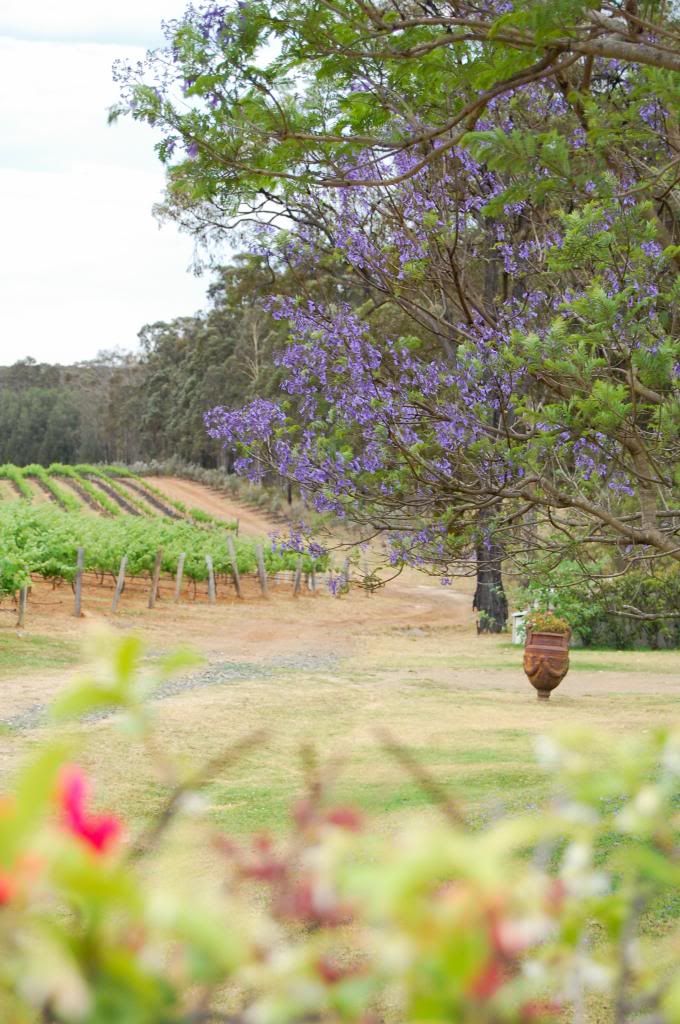
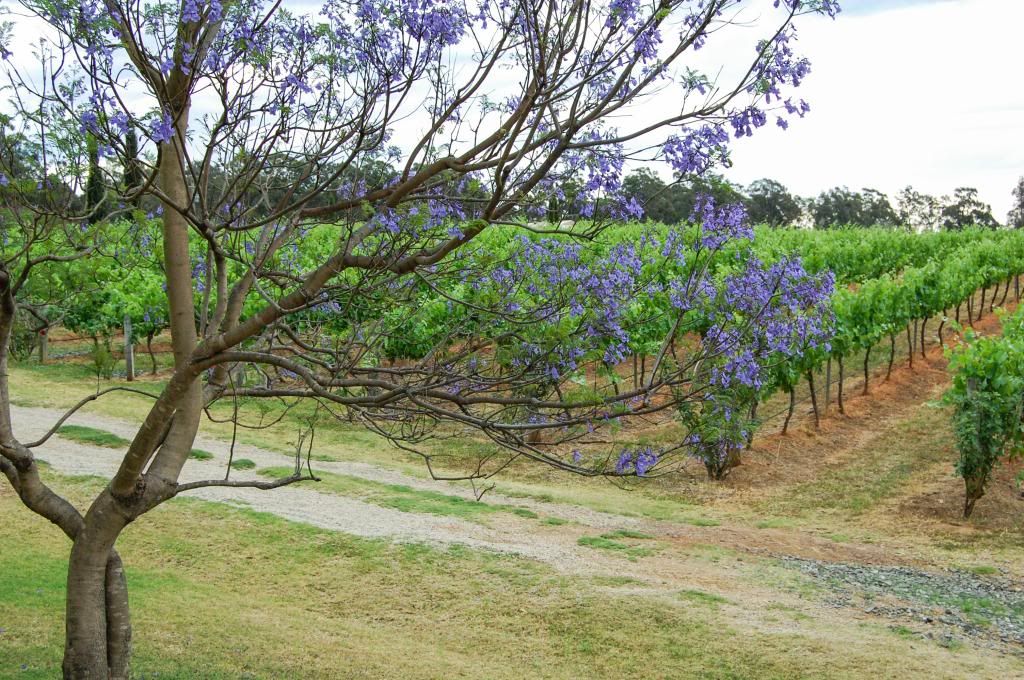
Patchworks of vineyards flanked by the Brokenback Ranges were a real sight especially the rows of green against the dusty brown of the land. It hasn't rained here since February. The horses in the neighbouring property came to us for food and we picked the last bunch of green grass we could find for them.

Even the kangaroos were desperate and at sunset we walked along a dirt road towards dozens of Eastern Greys gathered around a nearby billabong. We watched them for a few moments before my red dress scared them away.


We had dips in the pool and read to the sound of very excited birds above our heads. Pink galahs were the only ones I recognised.

We walked to Restaurant Botanica on the first night. Every once in a while, something magical comes along when you least expect it. I wasn't expecting to find somewhere to eat that grows its own heirloom vegetables or somewhere that believes in organic gardening. I certainly wasn't expecting to find Black Berkshire pigs in the backyard. And yet this is what we found when we popped by earlier in the day to have a look at the menu. A beautiful kitchen garden and three very friendly muddy pigs – Chop Chop, Salami 2 and Crackle – who all loved a good scratch. Coming across it in that moment brought tears to my eyes. 'This is where we're eating tonight', I said to Graeme.

It was perfect. All of it. We oohed and oh-myed over the duck and the pork belly. The brioche-crumbed pork rillettes came from Salami number 1 and their marinated fetta was the same amazing fetta we tasted at Binnorie Dairy that afternoon. We even tasted beautiful artisan sourdough made from the same flour these guys use.


If that wasn't enough, we had a lovely lunch at Panino in Wollombi. A simple organic chicken burger and pizza is all we wanted that day. I loved seeing glass bottles of Udder Farm milk for sale inside the café.

We were wise to visit just a few cellar doors and not go over the top with expensive all-day wine tours. It's what most people do when they visit but I hated the thought of being a captive audience. So we went at our own pace and fell in love with a bottle or two (not surprising with floor-to-ceiling views, Ella Fitzgerald's voice and tasting notes that read like poetry). 

I know the Hunter Valley is all about the wine. It's what everyone goes for. But it was all about the food for me. Always the food.

Saturday, 3 November 2012

Food Artisan: La Tartine

I love to shout about people who do good, especially when it comes to food. I knew when I visited La Tartine that I wanted to do a lot of shouting. I hope everyone can hear me...

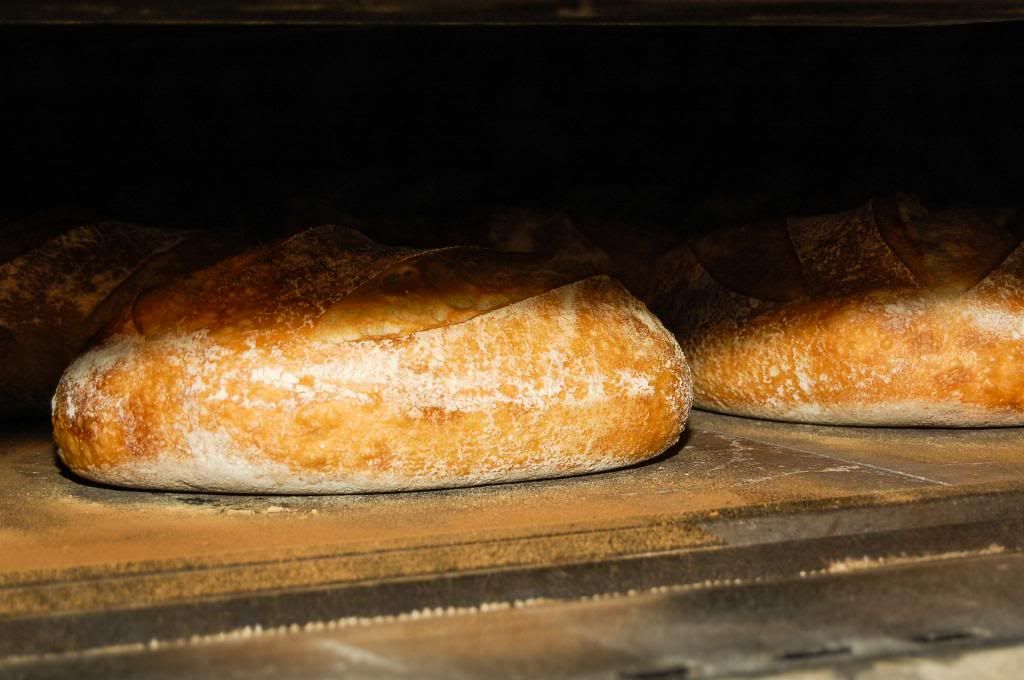
Nick Anthony and his French wife, Laurence, opened La Tartine, Australia's first certified organic sourdough bakery, almost 15 years ago. They moved over from France where they made traditional pain au levain – proper heavenly sourdough with nothing but organic stoneground flour, spring water and Brittany sea salt. This beautiful bread with its distinctive sourness, chewy open crumb and sweet, crackling crust is the reason they set up their own bakery on Wisemans Ferry Road, Somersby here in NSW.

Instead of French ingredients, these Central Coast-made loaves use organic flour from Gunnedah, filtered tap water ("there was no way we were using tap water after our daughters complained their bath water stunk like a swimming pool!") and Murray River salt.

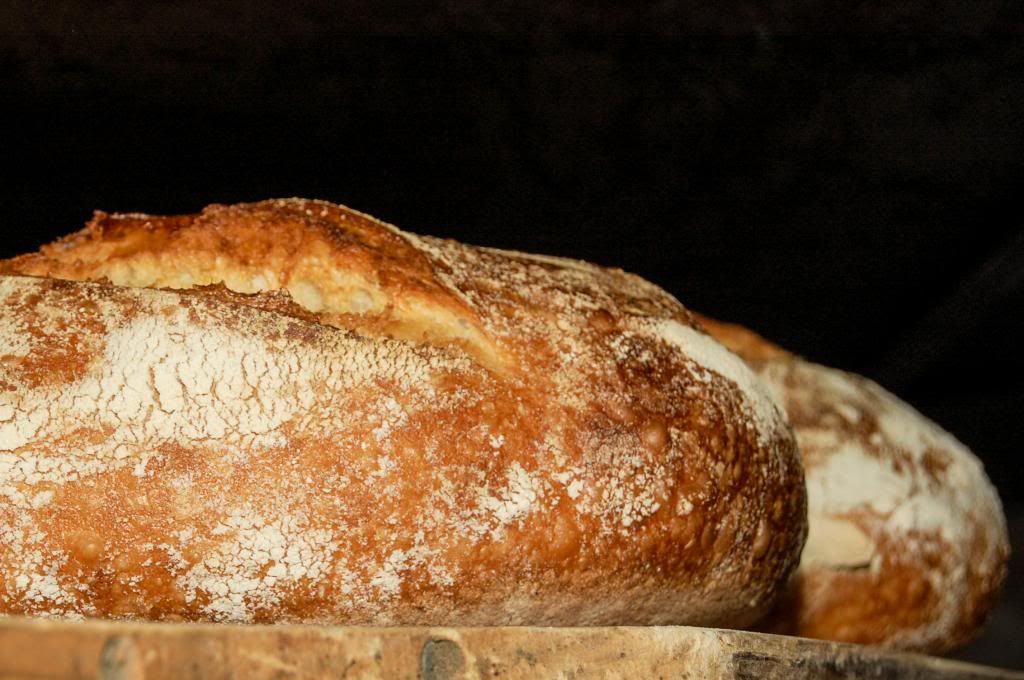
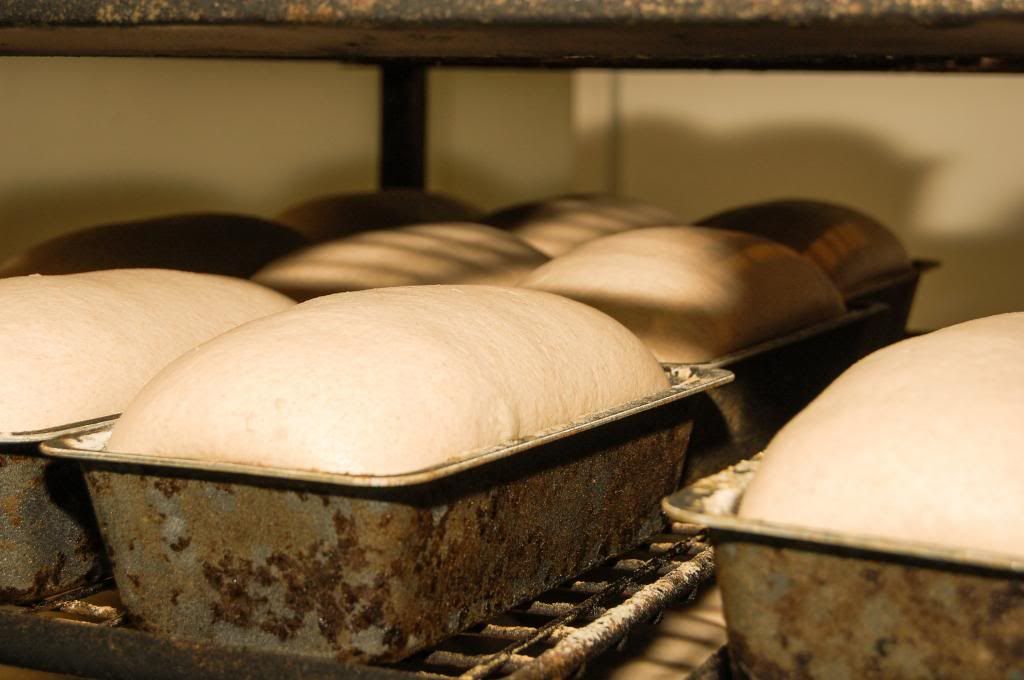
So what is sourdough? Well, it's bread raised using natural yeasts – wild yeasts that are all around us. The sourdough process starts off with a natural leaven made up of flour and water that's left to ferment with the help of these airborne yeasts. This leaven is mixed with more flour and water to make a dough, then it's cut, weighed and shaped into loaves – all by hand at La Tartine. It's the long proving, though, that makes a great loaf.

Jan Hackenberg, one of Nick's bakers, and one of those infinitely charming people who draw you in with talk about their craft, did just that. He talked to me about bread. He told me that a properly fermented sourdough is much easier for the body to digest. It's how we should eat bread.

And have you wondered about those cheap loaves with a sourdough label? Well, that's all they are. Commercial yeasted breads made sour with added vinegar. Sourdough, as Nick pointed out to me, is more than just a sour bread. It's all about the fermentation and the proving; the sourness is simply the end result. You can always tell a slow-fermented loaf by the air bubbles all over the crust.


The stoneground flour they use is creamy and coarse. It's beautiful. Modern powdery roller-milled flour, on the other hand, is stripped of its nutrient-rich wheatgerm and bran.

But here's why they scared me. They work really hard; they lug back-breaking bags of flour and cut loaves from early morning till late at night. Slow food is always really hard on the people behind it. It's passion that drives them. But they can't get dedicated folk who share the same passion to work as hard as they do. They never last.

It's so hard on them they don't even want their children doing what they do.


What happens in years to come when Nick and Laurence want to retire from 14-hour days at the bakery? Who will take over and sell us sourdough at the markets?

Will there always be someone like Jan who cares enough about slow food to work this hard, or will traditions eventually die out because the appeal to earn quick money making cheap food is too great?

People nowadays don't want to make bread this way, or cheese... They don't want to age their meat and they don't want to properly cure their bacon. Slow food is becoming a rare thing.

It's there if we look for it. I'm always looking for it. Writing about it. I know that helps.

If you live near me, look out for La Tartine loaves – they're sold in most good grocers around Sydney and the Central Coast (or head to the bakery on a Friday after 3pm and meet them in person). If you live in London, read the piece I wrote for Homes & Gardens on London Bakeries – it was always a good day when Graeme walked through our front door with a St John's loaf. If you'd like to try and make your own, then come back here. I'll be making my own sourdough very soon. My pat, pat, rub, rub rhythm is working well...

What's your idea of slow food? Do you wish it was the norm? Do you live near lots of wonderful artisans?

Follow me on Facebook or here on Blogger and you'll know when I get it together to start sourdough at home. 


Another artisan: Cocopure

Wednesday, 10 October 2012

Fish stew from a potted garden


Four gardens beds around the house aren't quite enough, so I grow a lot in pots. And wheelbarrows. And the occasional baby bath. Herbs, flowers, greens, beetroot and carrots are in pots chez moi.

Some of it works – my hydrangea is happy as is the sage and flowering thyme. And some of it doesn't – if the strawberries, mint and rocket were people, they'd be a sour-faced dour bunch of grumps.*

My tarragon, which shares its garage-sale pot with oregano, is probably more like a 1960s Julie Andrews. Chirpy and oh so sprightly.

Which is just as well, because it's my favourite herb. Have I ever mentioned I could eat béarnaise with a spoon?

This afternoon, after I'd worked at the computer all day and with under half an hour to spare before I had to pick the boys up, I realised I'd cut it too fine to make fish pie with Graeme's leatherjacket. Time for something quick, so I wandered into the garden and picked sprigs of tarragon and thyme and a couple of bay leaves.

A summery fish stew is what I made. I sautéed 1 chopped onion and 2 garlic cloves in some coconut oil for a few mins, then added 3 chopped anchovies, 2 chopped tomatoes (from my FIG box this week!) plus the thyme and tarragon and let it all soften a little longer. Next, I added a good splash of white wine and let it bubble away for a few mins before adding roughly 350ml of stock and the bay leaves. I brought it to the boil then added enough couscous to soak up most of the stock. I let it simmer gently, then stirred through around 500g of white fish – cut into chunky pieces. Another 5 mins and the fish was cooked. I took it off the hob, checked for seasoning, put a lid on it and rushed out the door to fetch my little rascals.

A one-pot dinner in under half an hour and both boys loved it. (OK, so one really enjoyed it and one just ate to fill the tiniest bit of his tummy. But I can live with that.)


* These grumps in the garden are the reason why I'm doing Nicola Chatham's next online course: Grow Organic Food in Pots. Wherever you are in the world, if you want to learn more about Nicola and her lovely way, you can get her free (yes, free) video on 'The 5 Secrets to Growing Organic Food in Pots'. Maybe I'll see you in the 'classroom'?

Slow bread


I pitch lots of ideas all the time. Some get commissioned, some don't. Of the ones that get the go-ahead, there are stories I would happily write for nothing. La Tartine, an organic sourdough bakery here on the Central Coast, was one such piece.

It was the school holidays, or in our case, preschool holidays, so Luca came with me. He sat on the floury floor and drew. He drew the mixers and he drew their fruit loaf.

His Mummy talked to the bakers. The bakers that make the best kind of bread. The same bread that was made thousands of years ago. The oldest kind of bread.

His Daddy took pictures (although I hasten to add that I took this one!)

I could have talked to them all day, but they had hundreds of loaves to roll, shape and prove. They had been there since early morning and wouldn't leave till just before midnight. Their days are long and very physical. But they do it because they're passionate about sourdough. They believe in bread made this way.

In what was really only a few hours, they managed to inspire, teach and even scare me.

The inspiring part is why I started my food artisan series. They're definitely next in line. I'll be writing another post very soon to celebrate the people at La Tartine. (I'll explain why they scared me – and I don't mean Halloween scary.)

Sunday, 7 October 2012

Fritters, peas and glorious orange


I love the seasons dictating what we eat. We haven't had any tomatoes since last summer, so we're eagerly awaiting our next crop. The seedlings are coming along nicely. I think I may have added too many in the one patch, but there's plenty of basil in there too – a favourite companion in the garden and on the plate.

I can't wait for fresh basil again and warm tomatoes grown in my own soil. I thought I ate seasonally before, but not compared to now. Tending a garden and growing your own, even if it's only some herbs and a few vegetables, connects you in so many ways to nature and shows you a much simpler way to eat. What it also does is disconnect you from the trappings of supermarkets. Once you get used to all that year-round choice, it sucks you in, making you believe that choice is a good thing, when in fact choice is a whole lot of stress and it makes me dizzy.

I've always known this, but I still did buy the occasional tomato in winter. I still bought those over-priced over-sprayed wrapped bunches of herbs. Now I wait. If I haven't got the herb in the garden, I haven't got it.

We've waited all winter to plant our tomatoes, to sow our borlotti bean seeds and to see our peas get fat. We've watched our coriander show its first feathery leaves only to bolt and do that annoying thing that coriander does.

I've had a lot of coriander to use up – I'm cutting it in a bid to stop it going to seed. I won't stop it, of course, but I might delay it a bit this way.

So there it was sitting on my kitchen bench top narrowing the choice for dinner. Not only was this satisfying in itself, but having to wait for something to grow and then use it to make a meal is even more satisfying. It may not be everybody's idea of simple (not when you think about how easy it is to just go out and buy it versus building the beds, sourcing the materials to make soil, sowing the seeds and waiting... waiting... waiting...). But it's certainly mine. And it's satisfying beyond words.

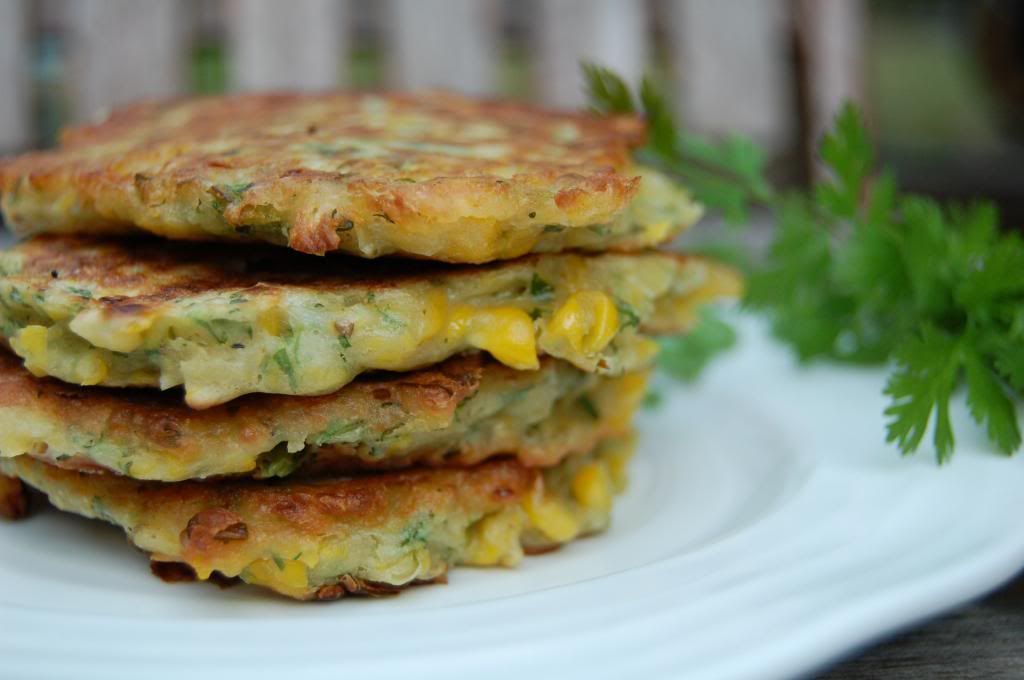
I made corn, coriander and coconut fritters* with some spring onions I picked up at the co-op that morning. I think they might just be the tastiest corn fritters I've ever made. They certainly beat these ones.

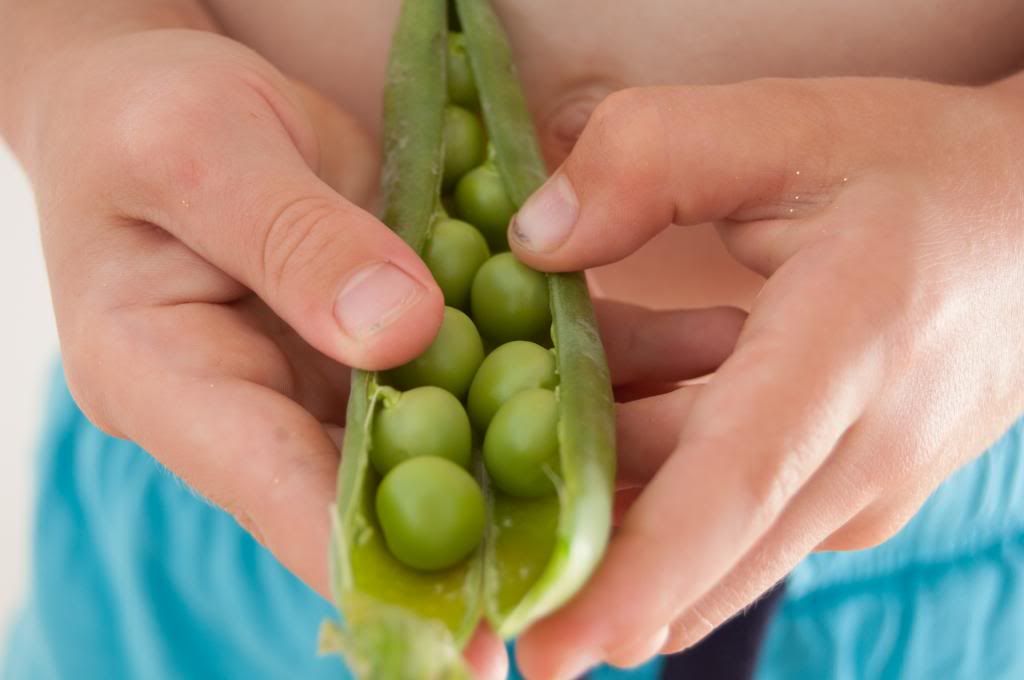
After Luca feasted on all the fat peas hanging six feet above the garden beds, I had to pull the whole lot out. Powdery mildew got the better of them.

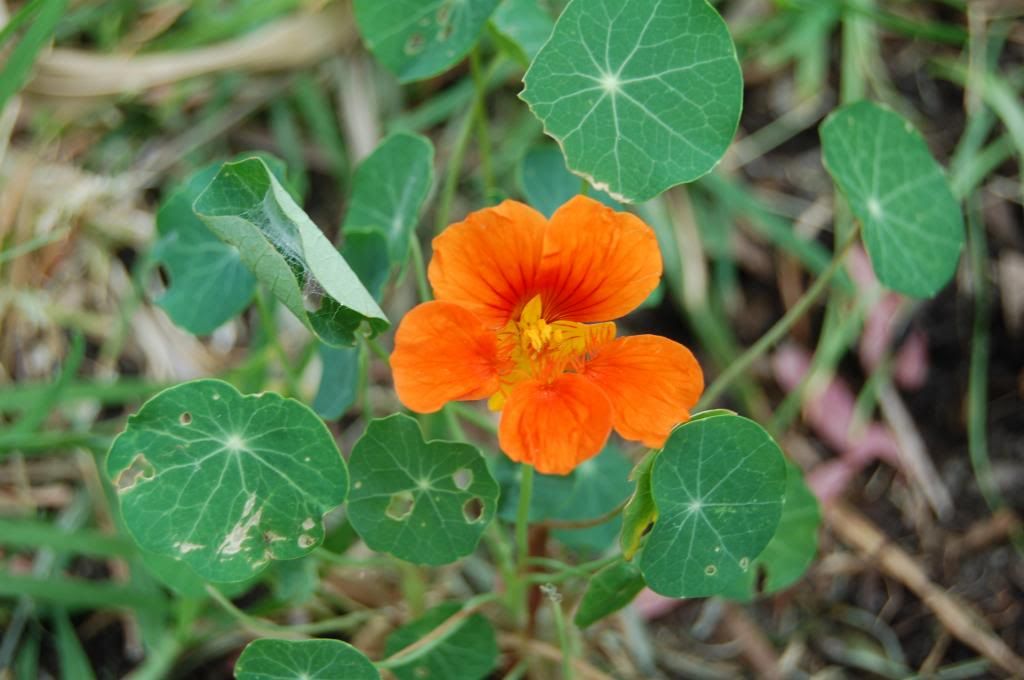
But sitting right there by the cabbages was one single nasturtium flower. That wild cutting worked.

So while my coriander plants just want to run away and flower, and while my peas have turned white and furry, it seems I know how to take a roadside nasturtium and make it flower in my own garden.


* Those tastiest corn fritters I've ever made: Mix 150g plain flour, 1/2 tsp baking powder, 1/2 tsp salt, 1 tsp ground coriander and 1 tsp ground cumin. Add 1 egg, 125ml coconut cream and 100ml water and mix well. Add 350g corn, 2 chopped spring onions and as much chopped coriander as you like (I like a lot) and stir through. Heat 2 tbsp coconut oil in a pan and cook dollops of the mixture until golden brown. 

Tuesday, 25 September 2012

Beautiful things


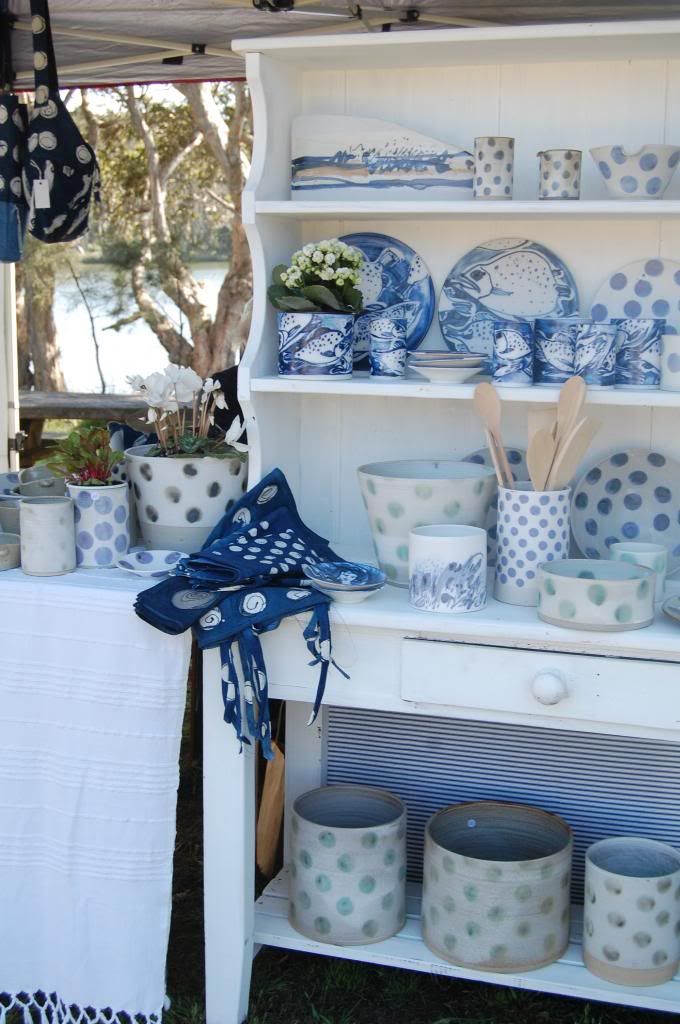
A local potter displays her wares at the Avoca Beachside Markets. I already have one of her blue polka-dot pots holding my utensils in the kitchen. And there's one in England cradling some garlic in my mum's house. I intend on buying more. A whole lot more. I love her stuff so much I'm going to feature her on the blog very soon.

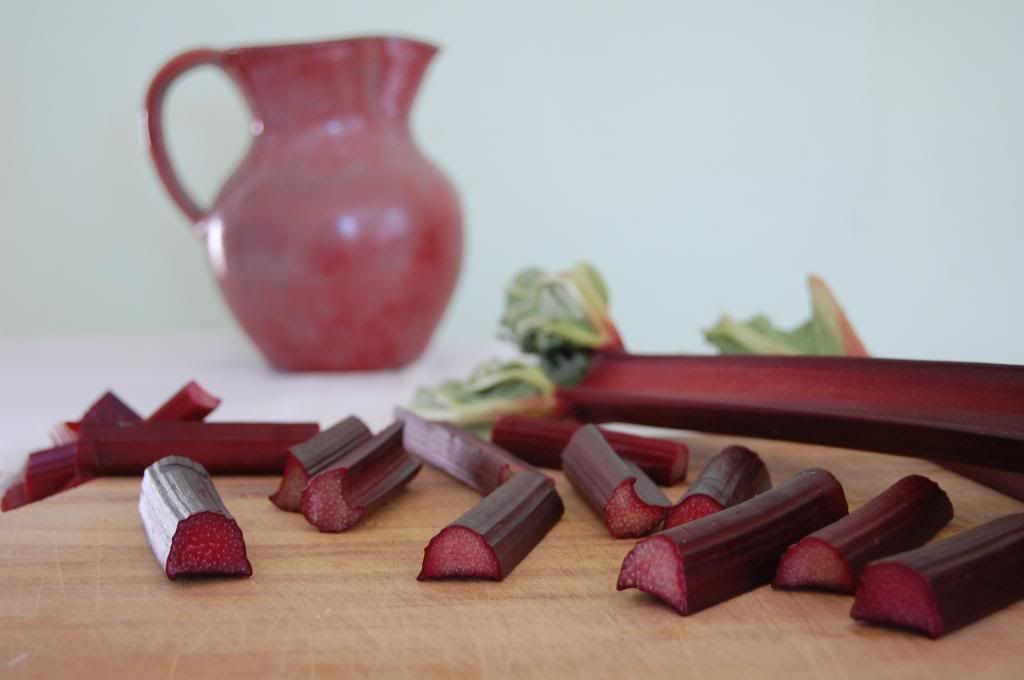
Pink rhubarb for a recipe feature I'm working on. I made jelly with the juice, then planned to eat the pulp with some yogurt or bake it in some shortcrust pastry. It didn't happen, because it was too good to eat straight from the fridge.

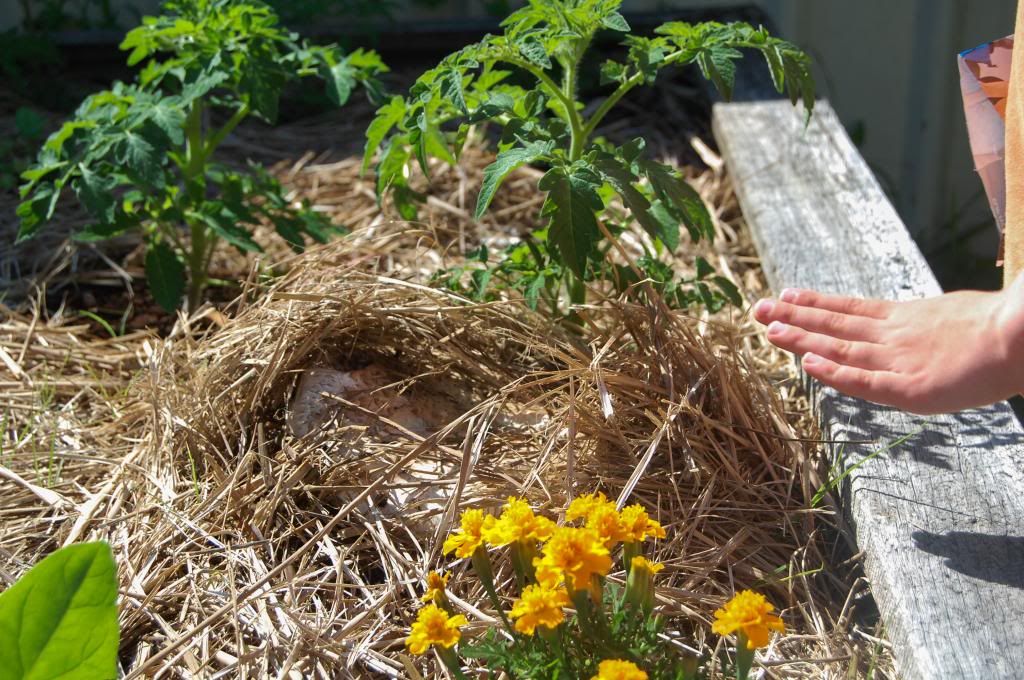
A little surprise in the garden. My heart sunk when I saw all these mounds. Some wretched thing digging up my tomato seedlings, I thought. The wretched thing, or things, were mushrooms. It's all that lovely mushroom compost I added to the beds. It's just a shame I'm the only one in this house who likes to eat them.

What do you think of all those blue spots? Are you going potty over them too? 

Thursday, 23 August 2012

Spiced apple turnovers


I've been putting off writing about my spiced apple turnovers for a while, thinking there was still some chilly weather to come before the season change.

But, oh my, I blinked and spring came and went. It's summer out there today. The boys went out this morning in shorts and t-shirts and a lick of sunscreen. (Though I'm still in jeans... I wonder if there are any other legs mums out there caught out by the sudden change in weather.)

The hot wind is blowing a gale through the house. It has the feel of sultry summers in Egypt. Yesterday, which was just as warm, I took my brother for an ocean walk along the rocks. The air was different, though. It took me back to Greece and bowls of calamari. I was in the mood for marinated anchovies. Sharp feta. Taramasalata (the real thing, not that pink goo).

Anyway, back to turnovers. I made these when Graeme and I fancied something sweet – I hardly ever make dessert, though I don't blame you for thinking my food consists of nothing but pastry, sugar and butter. See... that's the trouble with blogging. I'm only showing you the good pics, and it just so happens my camera has a sweet tooth. It doesn't seem to like the big salads I make or the khaki green smoothies. I'm quite certain it won't like the chickpea and coriander burgers we're having for dinner tonight.

Spiced apple turnovers*. A bit like making a quick apple pie. Except better. It's apple strudel. All that sharp fruitiness and aromatic spice.

Summer or not, these are good to make. In fact, they're just the thing to take cold on a picnic.

Now, does anyone know where I can find some smoked cod's roe (or the equivalent) to make me some taramasalata?


P.S. One day left to win this cookery tome.

*Spiced apple turnovers:

375g all-butter pre-rolled puff pastry
1 egg, beaten

For the filling:
4 apples, peeled, cored and cut into small chunks
4 tbsp sugar
3 tbsp sultanas or currants (or a mixture)
1 tsp cinnamon
1 tsp mixed spice

Put the apple chunks in a pan with the sugar and dried fruit. Add 3 tbsp of water and cook over a medium heat for 5 mins, stirring occasionally, until they soften. Add the spices and cook for 2-3 mins – add a little more water if needed – until the apples are pulpy. Leave to cool. Preheat the oven to 200C. Divide the pastry into 4 pieces and roll out quite thinly to roughly 12-15cm in diameter. Brush the edges with beaten egg, then divide the apple between the pastries. Fold the dough over the filling, and seal the edges. Transfer the pastries to baking sheets lined with baking paper, brush carefully with more beaten egg and cut a steam hole in each. Bake in the oven for 15-20 minutes until golden brown. They call for hot eggy custard, but a thick dusting of icing sugar will do just nicely.

Friday, 10 August 2012

Banoffee pie


I love banoffee pie. I don't think I've had banoffee since we left England in 2009. It's not that I like it any more than chocolate cake (any cake), apple pie or a good cheesecake. It's just that it has its place. It's the textures. The banana and the toffee. That crumb.

In England, it was slightly easier to make given that you could buy a jar of dulce de leche from a supermarket shelf. It was on my list of things I missed from home. I would eat the Argentine toffee spread straight from the jar, spoonful after spoonful. I'm not actually sure I made any banoffee with it.

I've been thinking about making this definitive pud of the 1990s for a while now. Wednesday was the day.

I had prepared myself all week for the fact I was going to be boiling condensed milk in the can. This is how you make the toffee in a banoffee – or so I thought.

I didn't need a recipe for banoffee – it is, after all, buttery crushed biscuit, toffee, banana and whipped cream (rich enough for you?) – but I definitely needed to know the details of safely boiling sweet milk in a can. I've heard horror stories, you see.

I stood in front of my cookery books (sadly, not the hundreds that I once had before we moved) and I pulled out Tom Norrington-Davies. A food writer and co-owner/head chef of Great Queen Street in London, but I wouldn't use the word chef for Tom. His writing and food is more than that. He's a cook. A proper cook. (Just checked his twitter account and he calls himself Chief Cook. Much better.)

Anyway, his is the only book I have with a recipe for banoffee pie.* I learnt that banoffee pie is actually an English dessert, not an American concoction. The other revelation was that he makes the toffee without boiling any cans. You just heat butter and sugar together, then add golden syrup and condensed milk.

Easy. And you really do end up with toffee in seconds. It's so quick that I overdid it and my first batch ended up more like thick fudge with burnt sugary bits. It didn't go to waste (by which I mean.... Wait. You know what I mean.)

I spent the day assembling (banoffee isn't really cooking or baking; it's an assembly job*) and I snapped away with my camera. 

I ended up having banoffee for lunch and just when I thought I couldn't have any more of those wonderful textures, I'd wait a bit and have a bit more.

When the boys came home, I was ready for all those moments that happen so often here. 

Whenever things got too much for me, in true Nigella style, I'd open the fridge door and sneak in a mouthful. I did it often that evening. And do you know what? I didn't lose my patience once with them. Knowing I had this in the fridge was all I needed.

So I may have just cracked it. The parenting thing, I mean. If I have something in the fridge – pie, cake, anything – that's just sitting there with a spoon at the ready so I can dive in whenever they get too tough to handle, I think the boys will turn out just fine.

Believe it or not, I have had enough banoffee pie for another three years. But there was a little left over, and Luca was clever enough to work out there was something in that fridge with the door opening that much over the last 48 hours.

He had a little after dinner tonight. So did Kian. As Graeme fed him a mouthful or two of crushed biscuit, Kian did that thing that Luca used to do as a baby, just before a feed. That desperate mouth-open rooting thing just as I'd undo my bra. The most adorable thing and I'd almost forgotten what it looked like.

But I was reminded tonight when my little sweet-toothed cuddlebug did it. Not for my milk. No.

He was rooting for butter and sugar.

I don't blame him. Especially when he's known a lifetime of plain yoghurt and fruit for dessert. Will he ever eat yoghurt and fruit again, I wonder?


* Recipe: Melt 50g butter and mix into 250g crushed digestive biscuits. Line the base of a Pyrex dish or cake tin with the biscuit base and set aside. For the toffee, heat very gently 125g butter and 100g sugar. When the sugar has dissolved, stir in 2 tbsp golden syrup and 200g condensed milk (about half a can). Bring to the boil, lower the heat and simmer for 3-4 mins, stirring constantly, until thick and toffee-coloured. When cooled slightly, pour it onto the biscuit base. Chill for at least 1 hour. Arrange 3 sliced bananas over the toffee. Whip 300ml double cream to soft peaks with 1 tsp honey and use it to top the pie. Adding the honey will not make the cream very sweet, but it makes it harder to over whip it (an old wives' tale that always seems to work). You can serve with chocolate shavings on top. The original recipe from Eastbourne, England uses coffee powder. From Just Like Mother Used to Make.

Wednesday, 25 July 2012

Food that sings

Organic carrots at FIG, my local food co-op, are cheap. Usually when I apply the word 'cheap' to food, I mean cheap and nasty.

But there's nothing nasty about these carrots, or anything else that I get from the co-op. I don't need an invitation to wax lyrical about my food co-op. Ever since we moved to Australia, I have struggled with the challenges of sourcing and buying fruit and veg that makes me feel good. Until recently, I bought a bit in a little gourmet grocer (do you hate gourmet as much as I do?), a bit at the supermarket, spent a fortune in a health food store, and supplemented it with a very small expensive weekly box delivery.

I have spent almost three years thinking we would never be able to eat the way I want us to.

If it wasn't breaking the bank, it was breaking me. That might sound a touch melodramatic, but for a while there I lost that connection – with food, with nature and with farmers. 

In the UK, I found it easier to find that connection. My weekly box came box with notes and beautiful anecdotes about who was growing what, and why the month's crop of purple sprouting broccoli was wiped out by a sudden change in the weather. It was very real.

I also found a little connection at the supermarket. The Big Four over there are just as bad as the Big Two over here, but I shopped somewhere that paid farmers a decent price for their milk. It was probably far from perfect, but I felt a connection and talking to all those producers and growers over the years, I believed this supermarket was committed to fostering good relationships with its suppliers. That feels right to me.

Labelling helped too, of course. I could tell my pork was raised in the open fields of East Anglia from outdoor bred pigs sired by pedigree Hamsphire boars and my raspberries grown by a nice chap called Harry Hall in Berkshire.  

Sadly, labelling over here is not the same. Beef is Australian and pears are grown in Australia. That's about all you get in my supermarket. When you think of the sheer scale of this beautiful country, there's a lot of connection lost for me where food is concerned.

Organic isn't everything. In fact, when it's packaged in loads of plastic and sits for days on end on the supermarket shelf looking miserable and tired, I'd probably rather go for the fresher stuff on the other side, even if it has been buffed and polished till it sparkles. (Actually, if it sparkles, I just go without.)

Nor is local. People pay too much lip service to local, especially people who don't care. I once ate in a restaurant in the West Country that was so proud of its locally reared chickens. 'It's all local', I remember them saying. I like a story, so I visited the farmshop down the road who sold these chickens. It turned out they were caged chickens. 

But when you combine organic with just-picked and local, and when it's perfectly in season.... well, it's food that sings. I have my connection.

Back to carrots. I ended up with 10kg last week (it was quite some singing).

Here's how they ended up. (And they all went down a storm in lunchboxes the next day.)

Carrot and sesame burgers with chickpeas, lemon and cumin

Kakiage (tempura vegetables)*


Do you need that connection too? Do you wish we had an affordable supermarket full of food that sings? One that could fill the gap that co-ops, farmers' markets and box schemes can't meet?


* Make the tempura batter by mixing 1 beaten egg with 1 cup of iced water, then gently mix in 1 cup of flour and a good pinch of salt. Pay it very little attention and don't worry about lumps. Whatever you do, make sure you have iced water and don't over mix. I added grated carrot, zucchini, red onion and red capsicum. I still had batter left over, so I dunked cauliflower in there too. Add spoonfuls of the mixture to hot oil and deep-fry until browned all over. Drain then dip into equal quantities of soy sauce, mirin, sake and a bit of sugar to sweeten.

Monday, 16 July 2012

Brown sugar

Luca has asked to go camping. He wants to make a fire and he wants to sleep in a tent. We've said summer's not far off. A few times now.

In the meantime, he's seen Jay Laga'aia and children on TV with marshmallows on sticks. 'What are those white things called?', he asked.

Marshmallows are not high on my list of things to make. But I'm not about to buy any. 

Junk food doesn't have to be junk. Made with unrefined sugar and gorgeous eggs from FIG, it's not junk out of a packet. It's a treat. Even better, he's learning about sugar dissolving in water, what a sugar thermometer does and what happens when you beat egg whites.


Pillowy soft squares of homemade marshmallow. Straight on the barbecue.

We stood on the decking under a cold dark sky and toasted our squares. Burnt bits of sugar and melting goo underneath.

I didn't think I would, but I went back for more.

Guess who stopped at one and turned his nose up? 'Daddy, can you make them nicer next time?'.

I can't wait to go camping now and take a tin of these with us.


From the River Cottage Family Cookbook. I love Hugh. Don't you?

Psst, have you thrown your name in the hat for some organic cacao and coconut goodies?

Tuesday, 10 July 2012

My first Food Artisan (with a giveaway!)

I said I'd bring you great food and inspiring people, and that's what my series of Food Artisans will be.

Food that sings to me and people who do much the same.

Because while food is everything to me, it's only part of the story. What I loved so much about my job in the UK wasn't so much conjuring up recipes and writing copy, but going out and talking to people. Producers, cooks, B&B owners, cheesemongers, coffee roasters, bakers, restaurateurs.

Anyone who will talk food with me.

I came across Cocopure at the markets.

I was instantly drawn to them – especially when the only thing my little cuddlebug would eat at one stage was spoonful after spoonful of their cacao cashew coconut butter.

Their chocolate coconut butter is incredible and I love cooking with their coconut oil.

But I actually wanted to find out more about them. Maybe it's because Steven and Monique run a successful family business with five children who eat well. Maybe it's because they homeschool. Maybe it's because Steven owned a graphic design business and now makes coconut superfoods.

Or maybe it's because they went travelling and lived on a boat for three years – with not one, not two, but three children. (We just about managed four months in a caravan with one child and a dog. So, naturally, I'm intrigued.)

See what I mean? Don't you love delving into people's stories too?

I do.

So I did.*

Cocopure

Had you always dreamed of a food business?

Neither of us dreamed of working with food. I had always been interested in food and health, but I grew more interested when I became a mum. We found out about coconut oil and its health benefits in Airlie beach. Steven immediately thought it would be a perfect product for a cottage industry. It was when we settled on the Central Coast that Steven experimented with raw food and started making raw treats. The attraction to cottage industry is that it's a good way to include the whole family.


Would you live on a boat again?

In a heartbeat. What holds us back, beside finances, is the children have settled here. We feel like we've really landed – at least for a little while. Travelling on a boat is very challenging. I have never had a relationship with a house like I did with the boat. Sometimes, usually while I was cooking with everything rocking, I would hate the boat like it was a real living thing. But other times, it was so beautiful. So romantic. I can't even watch the movies we took or look at the photographs, because it makes me really sad that it's over. It was exactly the magical experience we were hoping for.


How did you make it work with three children on board? 

We had no longing at all for city life. We really wanted to be there. I was doing everything I would be doing in a house anyway, like changing nappies, and the sleep disturbances were the same. It's weird, but I felt a bit cooped up in a house. The boat was much smaller, but we were outside a lot. When you sit on deck, the world feels much bigger than when you're in a house. We saw the sunrise, sunset and stars everyday. It wasn't always comfortable, but sometimes we even relished that.

How is life now?

It's much easier, but also much busier. For about a year, I couldn't get over how easy it was to do laundry. And not to have to ration water (28 litres a day)! A regular kitchen is so large compared to the galley. Everything felt large for about a year. 

We had to ration our coconut oil on the boat. Now it's delivered in large drums to the factory and Steven often brings us home a bucket full. With the business and five children the pace is non-stop, but it's also a lot of fun, because we get to participate in all that the children do. 

Is it difficult running a business and keeping family life happy?

I would say so, but that is the challenge for every family, whether they own a business or not. Homeschooling helps us, because it is quite flexible. Steven might work at the markets, but then spend time with us during the week. We always try to eat family meals and have celebrations together. We also make sure family comes first before the business. 


What do your days look like?

This is very changeable. I try to make a rule to wake up early and do yoga for my own peace of mind. Steven and I also drink a cappuccino together each morning. It's supposed to be uninterrupted by children, but never is. Then I usually focus on school work all morning, and we often do homeschool activities in the afternoon. Steven does the lion's share of Cocopure work, whether he works from home or the factory. Once a month or so, we all do a 'Cocopure push', which means we all pitch in and make as much product as possible. It's a very intense week.


So you're a family that eats well?

We aim to be a healthy family. It is so important. (Drinking cappuccinos doesn't count.) I have to plan our meals, but we constantly run out of food because teenagers eat so much. We drink green smoothies regularly and because of the business, we often buy food in bulk. I like to cook food from the Middle East. Slow cooked and soups. Plus raw foods and salad. Steven makes pretty good curry. 

I have found if I don't meal plan and make sure there is enough food in the house, we slide into buying take-out food and eating peanut butter sandwiches. If all else fails, I make porridge for dinner. We are a sweet-toothed family, so it's good to make protein balls out of whatever is in the house. We mix Cocopure with almond meal, coconut, dried fruit and seeds to make healthy snacks. Green smoothies are a good way to make sure children get greens and fruit in one hit. 

What's your favourite Cocopure product?

Cashew lasts the least amount of time in our fam
ily. Steven and I have to hide it from the children. 


What does good food mean to you?

A table set. Family and friends and most of all, with music. 

You can read more about their story here

Giveaway

Steven and Monique are very kindly giving away two goodie packs, each containing a pack of their single-origin sipping raw cacao (sweetened with organic coconut sugar and Tahitian vanilla bean) plus either a jar of their cold-pressed extra-virgin coconut oil, or their vanilla coconut butter.

Just leave a comment below to enter, along with your email address. Australian residents only - sorry! Two winners will be chosen one week from today.

And if you know anyone who'd love the chance to try Cocopure, please share!

Update: giveaway now closed. Congratulations to Carly and Joanna. Thank you to everyone who entered.


* Just so you know, I'm not paid for this post. I'm sharing this, just because.

Friday, 6 July 2012

The good stuff

I'm still in survival mode.

And after reading what sounds like very good advice on parenting toddlers (actually, parenting full stop), I'm thinking I should try harder. Ditch the lazy 'battle-it-through' and adopt a more understanding approach. Except that I'm very tired.

So I'm not very patient at the moment. Which isn't so great for understanding a child's perspective. It looks like I'm back where I started.

Working out what is going on, deciding on different strategies and putting them into practice... well, it's draining just thinking about it.

But it's what I will do. Eventually. I'm not one for leaving things to sort themselves out (although I should sometimes). I over-think and I analyse to death. So I'll work it out. Even if by that stage he's a teenager.

In the meantime, we're just pottering.

Quietly, I always hope. But very noisily, in reality.

While I pottered the other day layering vegetable scraps and newspaper shreds in the compost, Luca asked to pick some kale.


Truth is my heart sank. Not because he wanted to pick kale, but because Kian was hovering. Kian copies, like any sibling does. But he does everything more wildly.

I had visions of Luca picking a few leaves, then Kian pulling out all the kale from their roots. Thinking that was tremendous fun, he'd move onto the spinach and lettuce and within a minute, it would look like a whipper-snippered mess.

It was nothing like that, of course.

Luca snipped. Kian watched.


A bit of kale. A bit of spinach.


This is the best bit: I suggested making a juice out of it. And we did.

A juice of kale, spinach, banana, frozen berries, lemon, bee pollen and maca powder.

I have absolutely no idea what the bee pollen and maca powder do. I just know it's good stuff.

Thanks to Nicola Chatham, I'm not only growing all of these glorious leaves on a patch of concrete by my washing line, but because she introduced me to Jessica Ainscough, aka the Wellness Warrior, I'm making juices I probably never would have made.

They drank the lot.

Kian, my fussy little eater, who throws food across the table, who kicks his plate in disgust...

Consumed. And. Enjoyed. Raw. Greenery.

It was a lovely moment.