A council-run composting and worm farm workshop. Riveting, don't you think?
Well, it was. Even more riveting was the fact they were giving away free compost bins and worm farms. What a fabulous thing for a council to organise.
The local CWA hall was packed on Wednesday. Full of people who wanted to learn and go home with a freebie for their garden. The room had a beautiful energy about it. There were people – like the gentleman sitting beside me – who kept an immaculate lawn but knew nothing about composting or worm farming. Others had tried to compost in the past but ended up with a sludgy mess and gave up as a result. Surprisingly, I was one of only three people who use a compost bin and keep a worm farm.
I feel quite confident about composting now, having done Nicola Chatham's online gardening course earlier this year. Our worms do their jobs well, and even though any niggles I have about harvesting the castings will get covered in Nicola's next course*, I went along because I knew I'd learn something. I'm in my element when I can delve deeper into something that inspires me. It's why I ask lots of questions. It's the one thing people always say about me...
Anyway, aside from feeling very sad at one point when it was pointed out that over a third of everyone's bins is made up of fruit and vegetable scraps filling up our landfills, and how all this needless waste gets converted to ozone-depleting methane, it was a worthwhile morning.
Here are some notes I made for you.
- Composting is really quite easy. The reason why people give up is they add too much nitrogen-rich matter (kitchen scraps, fresh lawn clippings, manure, mushroom compost) and not enough carbon, or poor layers (newspaper, brown leaves, dried grass, hay). I follow the 2:1 ratio for layering – 2 parts carbon to 1 part nitrogen or thereabouts. I keep it in mind, but I certainly don't lose any sleep over it. As long as there's enough carbon in there, your compost won't turn smelly or wet.
- If you fill your compost bin right up (the way I do it, layering with as much variety as I can get my hands on), and you turn it, say, once every 10 days, you will get beautiful rich compost within 10 weeks. How exciting is that?
- If you just want to add your fruit and veg as you go from the kitchen, you'll still get to make 'food' for your soil; it'll just take longer. Always finish with a carbon/poor layer which will keep any flies at bay.
- As for worm farming, you don't need to go and buy one of the expensive kits. All you need is a polystyrene box or two. I might be making one of these myself to extend our little worm family. (I promise I'll try and get out more.)
- You generally start off with around 1000 worms. You can buy worms in garden centres or get some from someone with an established worm farm. Or get your little tikes to harvest worms from the garden – they don't need to be special composting worms. Ordinary earthworms will do the job just as well (according to the workshop).
- Worm juice, which is actually their pee, is liquid gold fertiliser. Just dilute with water to a ratio of 1:10 and it'll make your garden (and your indoor plants) very happy.
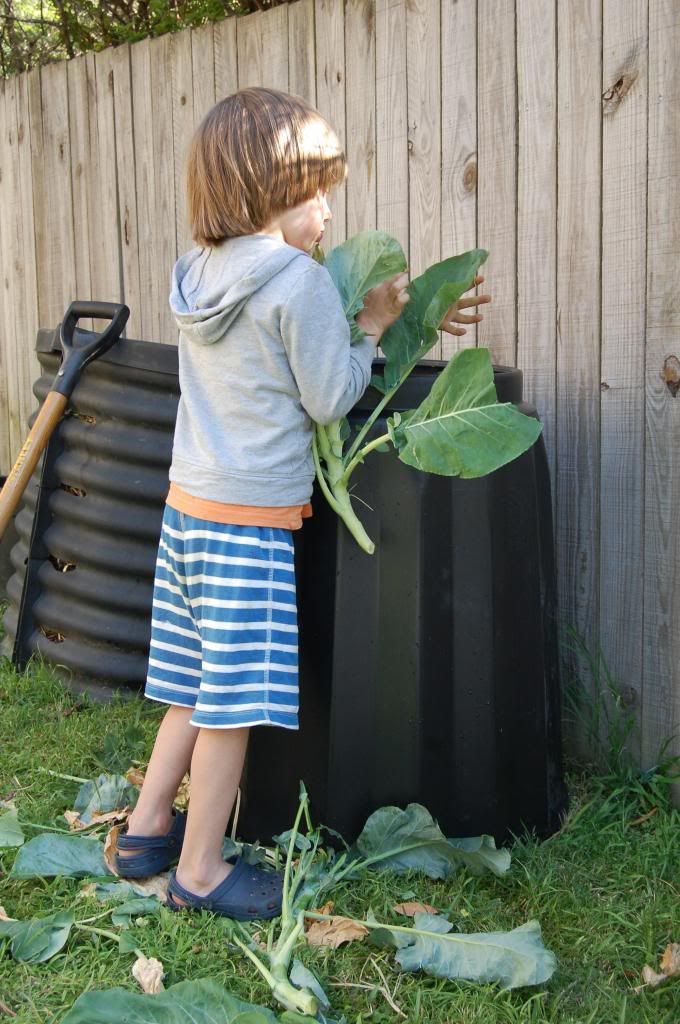
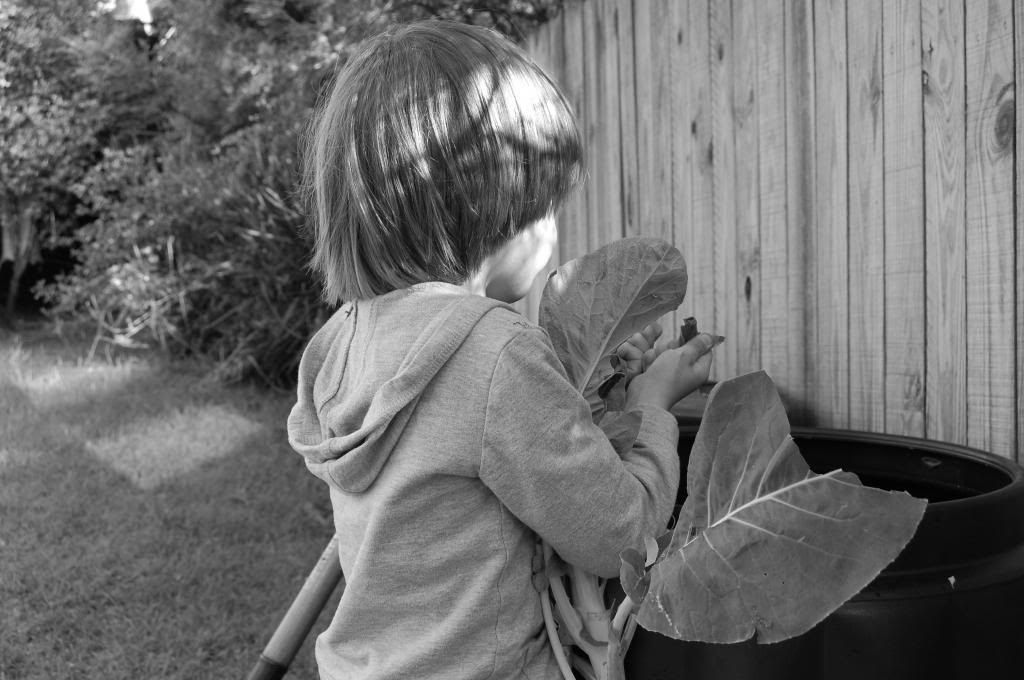
Luca and I spent the next day starting to fill our third (freebie) compost bin. We cut down the last of our winter broccoli and cauliflower and tore them all up ready to go back into the next cycle.
I came home that day and looked at my worms in a slightly different light, now that I know a little more about these spectacular creatures' anatomy and how they breed.
I came home that day and looked at my worms in a slightly different light, now that I know a little more about these spectacular creatures' anatomy and how they breed.
I discovered melon is one of their favourite foods, so that day they dined on melon skins and their usual banana skins. I made up two watering cans of diluted worm juice and drizzled one lot over the tomatoes and basil, and the other can went over my leeks to perk them up after the aphids almost got them.
I love working with nature. I really do.
I love working with nature. I really do.
Do you like composting? Do you skip in the garden knowing you're turning waste into magic? Do you squeal with delight when you turn that tap on the worm farm and it all comes gushing out?
Perhaps you think I ought to get out more too?

*I'm joining Nicola Chatham for her next course on organic gardening in pots. Nicola's also covering worm farming – yippee! I'll post more details soon, but you can get her free Organic Veggie Patch Kit here in the meantime.